linyan.io is built for content creators — one prompt, one video, no pipeline engineering. Before we let anyone near it, we needed to know where it breaks. So we gave it the hardest thing we could think of: a full fantasy feature film.
The Jade Tithe is a cinematic fantasy drama set in a historical East Asian world. Two non-human characters — MO, a halfling scholar with pointed ears and dirt-caked bare feet, and YAN, a half-elf warrior with heterochromia and a scythe — move through 70+ scenes across an entire feature-length story. Firelit huts. Bustling village streets. Emotional dialogue. Ancient scrolls.
If linyan.io could hold together through that, a 30-second social clip is nothing.
How linyan.io works
Single-prompt to video. You define your characters once — appearance, proportions, clothing, props — and that definition travels with every scene you generate. We orchestrate the underlying model so you don't have to re-describe your cast on every clip.
The test: Scene 3, The Last Congee
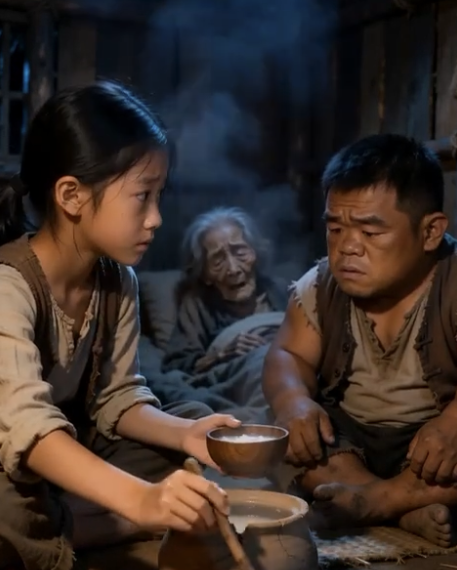
We picked one of the hardest scenes in the film to start with. INT. a one-room dirt-floor hut, night. Dying firelight. Three characters: MO, his teenage sister MEI, and their elderly mother. A cracked ceramic pot of congee divided with painful precision into three unequal bowls. A bamboo scroll hidden under a floorboard.
Dense scene. Specific characters. Difficult lighting. We ran it through linyan.io and through LTX-2.3 — currently one of the strongest open video generation models — on the same prompt, first attempt, no iteration.
The results
linyan.io — first generation
LTX-2.3 — first generation
What held up. What didn't.
✓ Held up
The atmosphere landed on the first try. Firelight, smoke, dirt floor, three characters in frame — the scene reads correctly without iteration. For a content creator, that means fewer generations you throw away.
✓ Held up
30-second clip length. The scene has room to breathe. We got 10-second clips out of LTX-2.3 at our API tier — your limit may vary, but ours did. For storytelling that matters.
✗ Broke
MO's character definition didn't fully survive. The pointed ears and halfling proportions — the things that make MO
MO — flattened into a generic figure. The scene worked. The character didn't.
✗ Broke
No audio. The congee scene lives on silence and subtext. Right now linyan.io generates vision only. That gap is obvious the moment you watch it.
What we're fixing next
-
Character-aware planning
The prompt defines the character. The planner needs to enforce it — catching drift across scenes, flagging when MO's ears disappear or Yan's heterochromia shifts. Character consistency has to be a system guarantee, not something you check by eye.
-
Sound — Suno integration
Music and ambient audio first, synced to clip mood and pacing. For content creators, sound isn't optional — it's half the post. We're building the integration now.
-
Story-level scene context
Right now each prompt is stateless. The planner doesn't know what happened in the previous scene or what's coming next. Giving it story context — not just character context — changes the quality of what it generates.
The honest takeaway
A fantasy feature film is not what linyan.io is for. It's for a creator who wants a 30-second clip that looks cinematic, sounds right, and features a consistent character — in minutes, not hours. The Jade Tithe stress test told us where the floor is. Now we know what to raise.
If you want to follow the build, linyan.io is open source at github.com/mengweetan/linyan.